
Under 10 sq ft, no smell, area is dry. Non-porous surface with no moisture or odor signals stays in homeowner-cleanable territory.
Cost guide
Mold remediation cost, by scenario
Remediation is priced on what the job actually requires — containment, demolition, drying, source repair — not on square footage alone. Find your situation below to see the band our estimator places it in and why.
Where these bands come from
- State-level cost guides (Angi, Forbes Home, Bob Vila), averaged.
- BLS construction wage indices by state.
- ZIP-aware adjustment for high-cost metros.
- The same rules our photo-first estimate uses.
Bands are pre-quote ranges. A site visit confirms scope.
Find your scenario
Each row maps a real intake pattern from our estimator to the band it lands in. Pick the closest match.
Visible growth under 30 sq ft on non-porous material with a known and fixed moisture source. Typically a single visit with light containment.
30–100 sq ft visible, drywall or wood involved, or moisture has been present for weeks. Usually adds demolition, drying, and tighter containment.
Over 100 sq ft visible, recurring growth, or HVAC involvement. Larger scopes and system-level work require more containment, drying, and post-work verification.
Hidden growth suspected, source unclear, or you need documentation for a renter, sale, or claim. An inspection sets a defensible scope before remediation pricing makes sense.
Areas may still be wet. Water damage restoration and drying come first; mold scope is set after the building is dry.
What goes into a remediation quote
A remediation number is the sum of these line items. Each one is triggered by a specific condition.
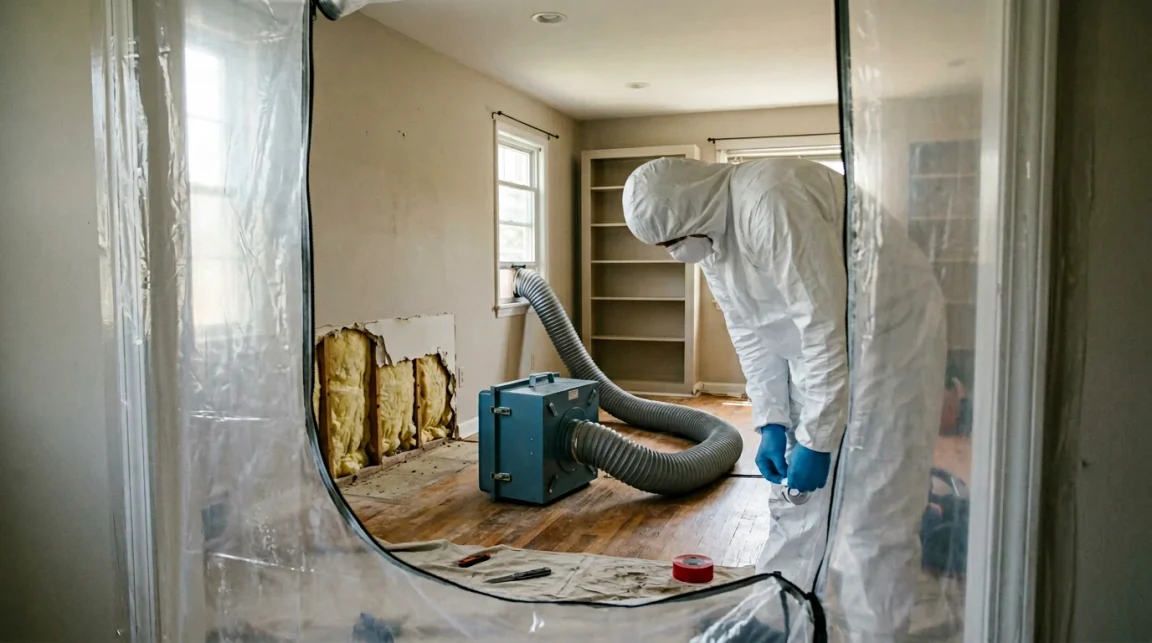
Plastic barriers, taped seams, and negative air pressure to keep spores out of clean areas during the work.
Drywall, baseboards, carpet, or insulation come out when they cannot be cleaned in place. Disposal fees vary by region.
HEPA-filtered vacuuming and wiping after demolition to capture residual spores and dust.
Industrial fans and dehumidifiers run until materials reach a safe moisture content.
Plumbing, roof, flashing, grading, or HVAC condensation fix. Without this, the mold returns.
Visual inspection or clearance testing to confirm the area is dry and the work is complete.
What can move your number
These are the factors most likely to push a quote up after the first walkthrough.
- Hidden growth uncovered after demolition (wall cavities, behind cabinets, sub-floor).
- An unknown or active moisture source — adds inspection time before scope is set.
- Porous material involvement (drywall, wood, carpet, HVAC components).
- Insurance documentation requirements — written reports, photo logs, lab testing.
- Local labor and disposal costs — vary materially by ZIP.
- Whether testing and remediation are billed together or separately.
Watch for these in a quote
Remediation quotes vary widely; the structure of the quote often tells you more than the number.
- A single flat number with no scope, square footage, or line items.
- Remediation quoted without identifying the moisture source.
- Same company performing inspection, remediation, and clearance with no third party involved.
- Mold “killing” sprays or fogging sold as remediation, with no removal of affected porous material.
- No mention of containment for areas larger than ~10 sq ft.
- Lab testing recommended without a visual inspection or moisture investigation.
Get a personal estimate
Answer a few questions, add photos, and see your scenario, your band, and the next step that fits.